Sponsored by


If this email gets clipped / cut short at the bottom by your email provider (like Gmail), just smash the READ ONLINE link way up top 👆 or go to the home page.
Welcome to the 26th Edition of The Bodyboard Report! 🤙
Our story today is a bit of a longer one, and I reckon it earns the space as I recently learned about new foam, though apparently it’s been around for over 2 years… just sitting there… quietly, just like the brand who has it now, and had it all before…
Go to any beach on earth. Point at the foam board under someone's arm and ask them what it's called. They'll say “boogie board.”
Not bodyboard, but most likely boogie board, and here's the thing about that. Boogie Board is a registered trademark, and it hasn't belonged to the man who invented it since the late 1970s.
It belongs to a toy company in California that also owns the Frisbee, the Hula Hoop and the Slip 'N Slide. That's not a scandal. It's just strange enough to explain almost everything about why the most famous name in our sport who had the world at its feet, the brand that came with the riders I idolized, spent the last two decades being the one brand serious riders wouldn't be seen on. 🫨
Let’s jump on it and ride it out.👇

The Surprising Kindle Hack 15 Million Readers Already Know About

Every day, the ebook editions of huge New York Times bestsellers are discounted to just $2. While most are unaware, readers with the inside scoop are filling their libraries with these deals.
Readers are finding these savings through a free service called BookBub.
It sends you deals on bestselling ebooks – starting at $2. No subscriptions. No monthly fees. Just books you actually want to read, at prices that don’t make you do a double-take.
You can expect:
• Personalized picks based on your reading taste
• New deals every day to find new favorites
• Flexibility to buy from all major ebook retailers
Given a single ebook can cost $15 or more – and avid readers can spend over $100 on ebooks a year – these savings add up fast.
BookBub’s deals are only available for a limited time. Sign up to see what’s on sale today.
A 9 ft block of foam and a carving knife 🔪
7 July 1971. Honl's Beach at Wai'aha, Kailua Kona, Big Island.
Tom Morey, 36 years old, former Douglas Aircraft engineer, mathematics graduate, jazz drummer, takes a 9 ft piece of polyethylene foam into his garage and cuts it in half with his wife Marchia's electric carving knife.
Then he shapes it with a household iron, laying pages of the Honolulu Advertiser over the foam so it doesn't melt into the plate. What comes out weighs about 3 lbs.
Tom goes out and rides it, and years later he described the sensation to Surfer Today:
"I could actually feel the wave through the board."
The second person on earth to ride a bodyboard was Marchia, who was 8 months pregnant at the time.
He almost called it the S.N.A.K.E., for Side Navel Arm Knee and Elbow. Thankfully he loved jazz more than acronyms and named it after the boogie blues tempo instead. (Raise your hand if you knew that part…)
The first ones sold for $37, because that's how old he was. The first proper production run was 1975. The 132 B.E., hand shaped, model number running off the Baha'i calendar because Tom was Baha'i. (It’s a faith, in case you were wondering, as I was.)
By 1977 the Carlsbad operation was turning out 80,000 boards a year with roughly 100 staff across California and Mexico.
That's when he sold it. Kransco, a San Francisco outfit, bought the Boogie somewhere between 1977 and 1979 depending on which source you believe. Tom took a lump sum with no royalties attached, and he never told anybody the number.
The inventor of the bodyboard settled for one cheque and walked away from every board sold for the next 50 years.

For 12 years the world title had a brand name 👑
Kransco put the boards into department stores nationwide. Patti Serrano, who'd joined Tom in the mid 70s, spent years driving coast to coast running Boogie contests out of surf shops, starting in Laguna Beach in 1977.
In 1982 came the Mach 7-7 with its slick bottom, and for the entire decade that followed it was simply the board. The reference point. Cheap enough that a kid could ride the same thing the pros did.
From 1982 to 1994, the world championship of this sport was called the International Morey Boogie Bodyboard Pro Championship, held at Pipeline.
Not sponsored by, but called so. For 12 years, if you won a world title in bodyboarding, you won a title with a brand name inside it. Try to think of another sport where that's true. This is likely as close to owning a sport as any company ever came.

The Blockbuster bit happens 📼
Well, maybe I should push back slightly on that comparison, because the real version is even worse…
Blockbuster died because it missed a technology. Morey didn't miss anything. Morey got bought by people who were never looking at the sport in the first place.
In 1994 Mattel acquires Kransco. That same year, the world tour drops the Morey name and becomes the GOB. 👉 Look at Mattel now
Still the year of 1994, and the brand stops being the sport's championship and becomes a line item in the world's biggest toy company.
Now it’s 1997. The Charterhouse Group and a management team spend $20 million to take Wham-O private and buy Mattel's sports division. Morey and Boogie go into a box alongside Frisbee, Hula and Hoop, Hacky and Sack, Churchill swimfins and a range of inflatable pool toys.
Wham-O changed hands a couple more times after that. In 2016 Joseph Lin of Stallion Sport, alongside Intersport, took the company over. Now here's the actual mechanism, which has nothing to do with Netflix.
The department store distribution that made Morey enormous was always an unwritten liability waiting to be called in. It just took 20 years for the bill to arrive.
Through the 90s it didn't matter, because Morey still had Stewart, Reale, Reeves, Skipper, McKenzie, Player and Ronquilio. You can sit on a rack next to the Hula Hoop all day long if the best riders on earth are on your boards. The team was the credibility.
Then the team left. Stewart to Science in 1998. Skipper to his own label Elemenohpee in 2000. One by one, over about 5 years the boys walked… paddled away.
And by the early 2000s there was nothing standing between the brand and the pool noodle aisle.
That's when the young guns stopped buying it. I got my first Custom X - IZN in 2003, the first time I was not riding a Morey since picking up the sport. So, it appears that Morey didn't lose to competitors. It built them 🛠️
Here is the part that genuinely stopped me when I started pulling the thread. Morey didn't just leak market share. Morey manufactured its own competition, over and over, for 20 years. That said, it is kinda inevitable. Bobby Szabad worked on the Morey Boogie factory floor. He left and founded BZ Bodyboards.
Debbie Colwell joined Morey in 1976. She left and founded Custom X in 1987, which became one of the most respected names in pro bodyboarding.
Ben Severson was riding a Mach 7-7 in the early 80s. From 1984, Morey were posting him blanks so he could customize them himself for Pipeline. Their R&D department was a teenager from Sandy Beach doing it in his own time. In 1987 he signed with BZ, released the BEN T-10 at $305, watched it become a best seller, and later started BSD - Ben Severson Designs.
Mike Stewart, who knew Tom Morey personally from childhood, put his name on a Morey Mach 7-7 in 1991 and brought the X-Flex core with him. Mike’s Pro Comp 42 in the blue, red, and white was my go-to board for quite a few years. Off goes Mike with Science.
Then there's the one that made me go “hold this beer a bit”…
Spencer Skipper. Morey team rider. The Ausie had his own Morey signature model, the Skipp SS, with the double X-Flex core. One of the riders a lot of us looked up to. In 2000 he co-founded Elemenohpee with Ross McBride and Nelz Vellocido, all 3 of them No Friends riders. LMNOP, if you were putting it on a sticker. One of their models was called the Skipp Comp. The man took his own Morey signature design, walked out, and rebuilt it under his own company's name. Elemenohpee shook the industry for over a decade before it wound down.
So, coming back to the Morey team through that era: Mike, Jay, Hauoli, Skipp, Bullet, Ben and Ronk. The rise of the gymnastic era. That is arguably the strongest team any brand has ever assembled in this sport.

But the world wasn’t sleeping, or roaring or weeping. Manta came out of Australia. Scott Hawaii going toe to toe through the 80s. NMD out of New Zealand in 1999, shaped by Nick Mesritz. Pride out of Biarritz. Toobs, 4Play, Turbo, Funkshen, Nomad, Empire, Hubboards, Hand Picked… The list got big, and it appears, it keeps getting bigger.
Rheopaipo deserves its own paragraph. John Holmes started the board brand on the New South Wales Central Coast in 1991, originally as Paipo Bodyboards, before a copyright problem forced the rename. Rheo comes from the Greek for flowing stream. PJ Hyland and Dave Appleby were the first team riders. Eppo, Ben Holland and Damian King all came up through it.
And here's the detail I can't get past. Holmes was one of the very few manufacturers in this industry who flatly refused to move production offshore to China, Malaysia or Indonesia. He built them at home until poor health and a poor economy closed the doors after 15 years.
Rheopaipo later came back with the ISS, the Interchangeable Stringer System, which let you physically pull the stringer out of the tail and swap a soft flex for a stiff one depending on the day.
Roughly 20 serious brands, nearly every one founded by riders and shapers, all eating a market one company used to own outright. So what happened to Morey?
It appears Morey didn't get outcompeted.
Morey got dismantled by its own alumni. 😬
But, it is inevitable with any new “thing” or craft. Teach people how to fish and you feed them for life… That’s just something teachers say.
You teach people how to fish, and soon you’re not the only fisherman in town...

Is this a bad thing the brand did? 💔
2021 👉 The 50th anniversary of the boogie board
According to Surfer Today's reporting, the Morey brand president proposed a special anniversary Mach 7 and agreed to pay Tom Morey 10% in royalties.
Tom’s health was already fading at this point, and he sadly passed away on 14 October 2021, aged 86, exactly 8 days after the city of Oceanside handed him a proclamation for his contribution to wave riding.
The boards were already made, yet the remaining family couldn't agree on how or to whom the royalties should be paid. Stock can't sit in a warehouse forever. So the company removed Tom's name and his likeness from the board and sold it as a celebration of 50 years of boogieboarding instead.
The Morey family said publicly that they weren't happy. I still can't decide who’s to blame. Everybody in it seems to have been trying to do something reasonable under pressure.
Regardless, the outcome is a heritage brand selling a 50th anniversary tribute with the founder's name scraped off the deck, 3 weeks after his passing.
Bad thing, bad luck, or bad timing?

Looking for the best way to reclaim your health?

Factor offers chef-crafted, dietitian-approved meals ready to eat in 2 minutes. Choose from 100+ weekly meals, including High Protein, GLP-1 Support, Calorie Smart, and Keto options.
Get 50% off your first Factor box + Free Breakfast for a year *1 free breakfast item per box for 1 year while subscription active.
How do you come back? 🔄
Terrence Lin is Joseph Lin's son. His father had him work up from the bottom of the company, and for a long stretch he had almost no authority to change anything. He's now brand director for all 3 bodyboarding brands Wham-O controls, which are Morey, BZ and Churchill.
What he did first was unusual for a corporate brand manager. He went into the forums and the comment sections and apologized for how the brand had been run. Then he called Melinda Morey, Tom's daughter, and asked for her blessing.
Then he called Patti Serrano, the woman who'd been promoting Boogie contests across America in the 1980s, about getting boards under kids again. Then, in October 2023, Morey launched a new rider and ambassador program.
I'll be honest about what that program actually was. They were looking for riders, particularly American ones, with between 4,000 and 50,000 followers. That's an influencer search, not particularly a pro team. But these days, the days of “eyeballs are everything,” the two aren’t mutually exclusive.
Enter Pierre Louis Costes who ended his 14 years with Pride and signed with Morey. That's the moment it stopped being a marketing exercise. PLC isn't a sticker on a nose. He works across product development, marketing, sales and athlete sponsorship for Morey, BZ and Churchill.
PLC's own line on it was that he wanted to carry Tom Morey's name as he kept riding at the highest level, and that this is a new era coming. In April 2025 they launched the Mach 7-7 PLC Pro in black and yellow, alongside a relaunched Turbo 4. Lightweight PP core, Surlyn slick, X-Flex mesh, double channels. There are matching PLC signature Churchill fins in 100% natural Malaysian rubber with his signature laser engraved into them.
And 11 days ago, PLC won Sintra for the 6th time, hot on the heels of his Maldives win, on his 62nd career podium to boot. He did it all on a Morey! 💪
The brand that invented this sport and then spent over 2 decades as a punchline just won the oldest event on the world tour with a legend in the making leading the charge.🏆
It feels like a “We’re back, baby!” kinda deal.

The number nobody noticed 🧪
This is the part I actually got excited about. Morey have a board called the Mach 12 MDS Eco Tech, and its PP core sits at a staggering 3.12 PCF (pounds per cubic foot)!
I never knew such a material even existed! Did you..?
If that number means nothing to you, here's the context. Most top end boards, pro models and customs run on the industry’s toughest PP core at 1.9 PCF. Some models have even experimented with 2.1 PCF
3.12 PCF is roughly 65% denser than the 1.9 PCF baseline, and still 50% denser than a 2.1 PP core. Nobody in bodyboarding builds foam that dense, that tough. With all the modern trimmings, I guess we never really needed to.
So I went looking for who developed it, and whether it was licensed in from an industrial supplier or built in house. The answer is in house. But the reason why is the bit nobody has picked up on.
It wasn't a performance project. It was a compliance project.
Lin has said the whole board was designed around Maui banning expanded polystyrene bodyboards. That's EPS, the cheap white beady stuff, what most people call Styrofoam. The $15 “one holiday only” board that snaps in half and spends the next 500 years turning into confetti on the sand. And the ordinance didn't just say no. It named the replacement: high density polyethylene, or polypropylene.
So Morey went and built a new kind of polypropylene board. Then they pushed the density until it could do things nobody expected.
And just look at what density buys you once you push it far enough 👇
No stringer required as the new core is stiff enough on its own.
No mesh, for the same reason.
No waste, because the material is expanded directly into the mold instead of being cut from sheet.
No deck wrap, because the surface grips well enough as it comes out.
No waxing required.
In one bold move we now have 5 separate components and an entire ritual deleted by making just the core material much denser. Is this the start of the future? 🤔
Now put that next to Rheopaipo's ISS and you've got the two opposite answers to the same question. Rheo said the stringer is so important that you should be able to swap it between sessions. Morey said the stringer is so unnecessary that you can toss it in the bin.

The board not yet tested? 🏋️
I was surprised to find that the Eco Tech is not brand new. See, this is why we need a Bodyboard Report - So some one can tell you sh*t. 😉 So keep sharing.
The Eco Tech went on sale somewhere between late 2023 and early 2024. It's been re engineered twice since, sold as the 2025 model and now the 2026 model, and the price sits at $109.
So this thing has been sitting on shelves for about 2 and a half years. And in that time, our sport has produced exactly one published opinion on it, based on a testing session at PLC's surf camp in France, where the feedback came back that maneuverability could be better, but it's a solid mid range board overall.
A few riders online called it Costco trash, which Lin pushed back on by pointing out that Costco wouldn't take it at that quality anyway.
That single verdict has been the entire published assessment of the densest core in bodyboarding for roughly 30 months. That's not a product failure. That's a media failure, and it's the kind I would be very interested in fixing.
The Eco Tech specs on the official Morey website 👇
Length: 42.5
Width: 21.4
Nose Width: 12.3
Tail Width: 17.8
Thickness: 2.6 / 66 mm
That is not a light rider's board. Purely if you account for just the 66 mm thickness of the most dense core ever. Add to it the length, and the numbers on this sheet are pointing at somebody bigger who requires buoyancy and stiffness over and above the usual off the rack editions.
So who tested it? A surf camp full of touring pros at competition weight?
I’ve noted this a couple of times before when relevant, and here it certainly becomes relevant. 👇
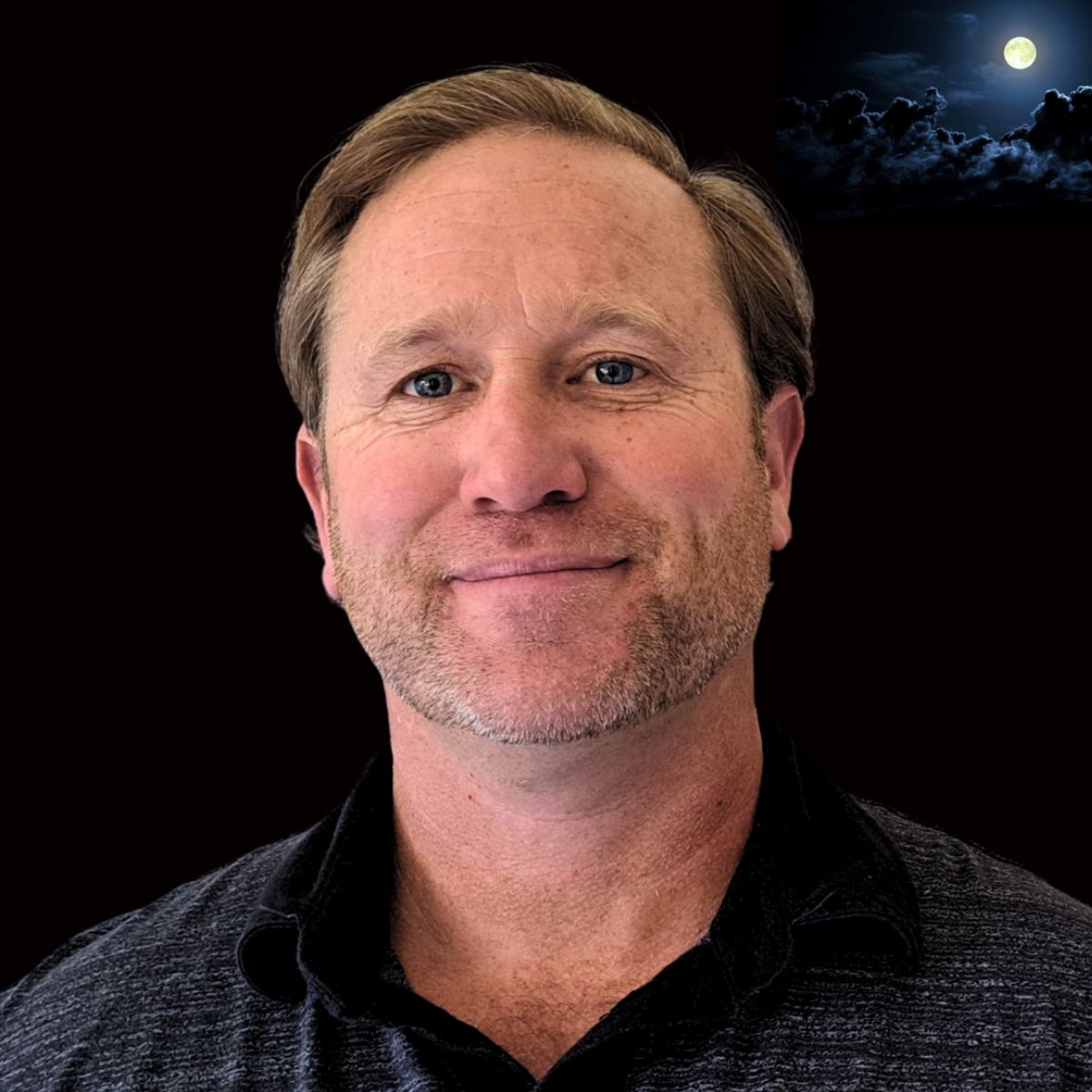
I ride a 42” 1.9 PP custom Rossi shaped by Marc Rossouw of HP Bodyboards, with 3 carbon stringers and mesh. Wide under the chest, and 60 mm thick, because at hovering around 100 kg / 220 lbs most of the year, anything softer folds under me or pulls negative within a month.
Boards used to last me a year. This one is going into year 5 and takes a solid punishment every week. Best investment ever! When I look at a 3.12 core and the Eco Tech template, I don't just see a stiff board. I see possibly the first mass market board in years, if ever, that was actually built with the right stuff for riders my size. By me (below) I mean this:
Wider shoulders, more muscle, more weight, more force, and much harder impact coming down off the lip in big surf. What can I say… It’s an Alan thing… 👇

Once more this raises something this sport has never properly asked itself. Almost every flex pattern, core density and template on the shelf descends from a pro model, and pro models get signed off by riders at the lighter end of the scale… Let’s say 70 - 80kg.
Heavier riders around 100 - 120 kg like Alan… and Alan… have spent the last 15+ years buying compromised equipment and being told to work on their technique and flexibility.
Maneuverability could be better might be a completely accurate review of that board.
It might also (most likely) just be what happens when you hand a heavy rider's board to a panel of “regulation weighted” ones.

Let me be straight about what I don't know. My Rossi is tuned for strength and stiffness. At the time of order Marc warned that this board will have no flex. After years of frustration, I could not give a flying, aerial f*ck about flex, recoil and things like that. Please just make me a board that lasts, wide enough so my elbows don’t slip off on a heavy drop or turn because they are tucked in under me in an unnatural / negative position, and if possible, let it not bend like school kid’s plastic ruler when you drop a knee and then a foot on it.
Silently I was counting on age to take its toll, and I was right. As this big, red beast got older and the materials more battle worn, the board became more flexible.
The Eco Tech is bulk stiffness, with nothing inside designed to spring. What do we know abou the recoil and flex of this super dense core? So it's entirely possible that a 100 kg / 220 lbs rider finds it holds a rail beautifully (as it should be buoyant enough) and still finds it dead off the bottom (as it is most likely too narrow). Elbows drop off, tail skids out, that sort of thing.
Big boys, the most dense core, the ultimate test. 🚀
That's the real open question, and nobody can answer it, because in 2 and a half years nobody has put one under anyone my size, as far as I know…
So, to the good people at Morey Bodyboards I say this 👇
Be pioneers once more. Get one under me and I'll tell you how it holds up. 🤙
Beef up the nose, tail, and wide point to something like a Turbo III, because at the current advertised price point you might just end up having the strongest and best selling board ever in places where the boys roll like this… 💪

“The MACH 12 ECO TECH isn't simply a bodyboard. It's a pledge to the future – of our planet, of our sport. It's not just about riding the next big wave; it's about doing so with the lightest footprint possible. This is our contribution to the sport we love – a promise to push harder to ride cleaner.”
Wahine 🌊 Namika is one heat from the title 🌸
Quick state of play from Jacaraípe, because this is now down to single heats.
Day 5 on Tuesday was the one that mattered. Namika Yamashita opened her account by winning heat 2 of Round 4 with 16.50, built off an 8.50 and an 8.00, the biggest total of the round. She admitted afterwards that she was nervous coming back, having been knocked out here last year.
Luna Hardman paddled out under a different kind of pressure. Lose that heat and the title was gone on the spot. She came 2nd with 10.40 behind Japan's Yuka Nishimura, which was enough to skip the repechage and stay alive.
Namika, 24, seals the world title the moment she reaches the quarterfinals. Not wins them, just reaches them.
The window closes on Sunday 20 September, and with the Pro, Junior and Masters divisions all still to be decided there's a lot of exciting surfing left, so keep an eye on IBC YouTube and Facebook.
Worth knowing while you wait 👉 The Wahine Pro boasts 79 riders from 8 countries. The PCD division for amputee, visually impaired and mastectomized athletes was the first to crown its champions.
Remember the names of these ripping kids 👉 France's Émie Padois, 14 years old, posted the first 10 of the event in the juniors. Sophia Veiga of Brazil scored a 15.00 at 12 years old. I haven’t seen riding this fluid, this far beyond their years, since André and Pierre were boys.
Wrapping up this session...
Everybody still says boogie board.
Those famous words that embody both the craft and lifestyle have now survived Kransco, Mattel, Charterhouse, Wham-O, Stallion Sport, a toy portfolio, a family dispute, 30 years of better boards from smaller brands, and the passing of the man who thought of it.
It survived because Tom Morey named something so well that the language simply refused to let it go. Probs why we call it a Speedo and not “grape smugglers” or “nut huggers” in the main stream.
I own one. It’s a Rip Curl “Speedo.” Got it half price in J-Bay at the factory shop. Wear it under my wetsuit and boardies, promise…
Whether the sport forgives the last 30 years is a completely separate question, and I don't think it should be automatic. An apology in a comment section doesn't undo a decade of discount store racks. A signature model doesn't undo the 50th anniversary board.
But for the first time since roughly 1994, the brand that named this sport has a world champion winning on it, a product guy who actually rides, and a technology nobody else has tried.
Keep charging! 🤙
Read more 👉 thebodyboardreport.com/archive


Disclaimer: The Bodyboard Report is published for informational and entertainment purposes only. All images, media, and referenced content remain the copyright of their respective owners and are used for editorial commentary and community sharing. The Bodyboard Report does not claim ownership of any third party content.